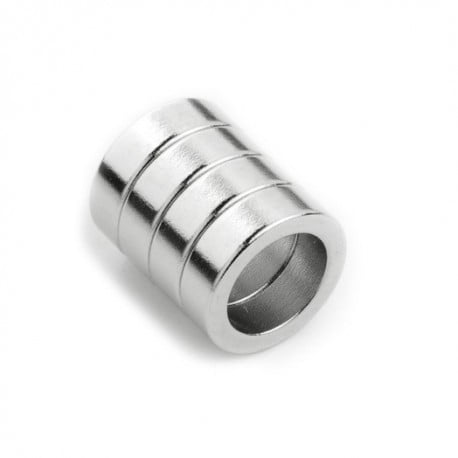
Struggling to find a magnet strong enough for your design? These tiny powerhouses offer immense force, but finding the right one can be a challenge. We have the solution.
Neodymium magnets are used in high-tech industrial applications like electric vehicle motors, MRI machines, and wind turbines. They are also common in consumer goods like premium packaging, door catches, and electronic devices, offering strong magnetic force in a compact size.
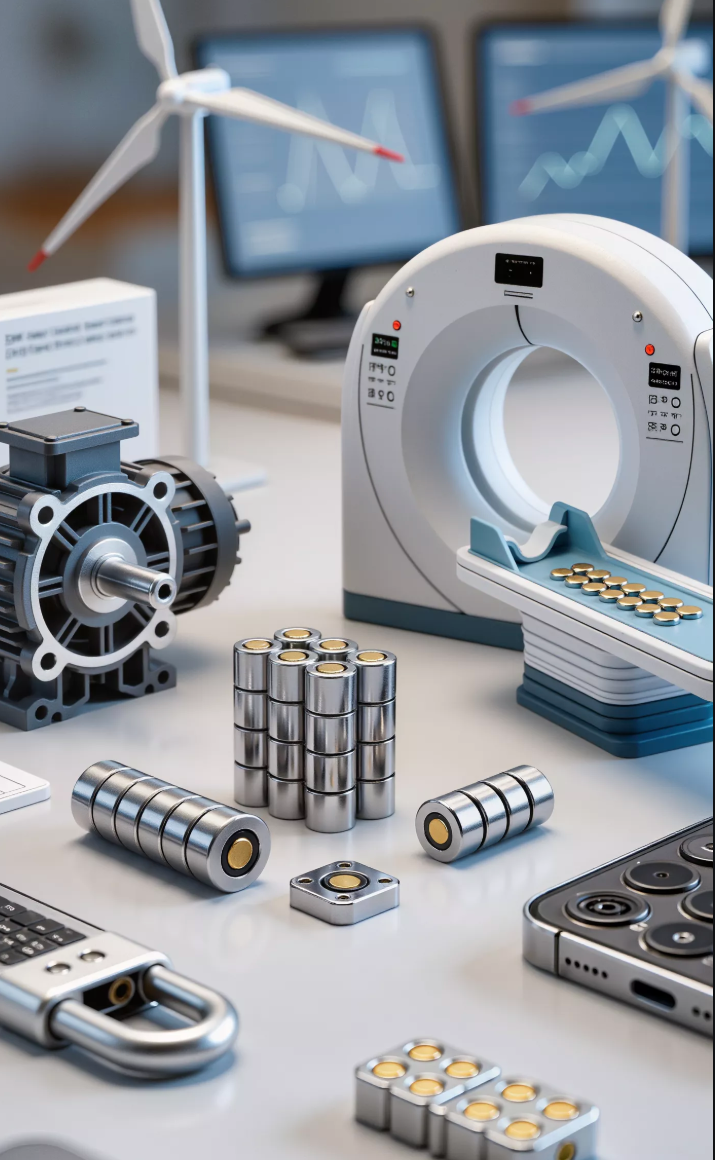
You see these magnets everywhere, from huge industrial machines to the clasp on your bag. But what makes them so special for such different jobs? Their power comes from a unique combination of strength, small size, and energy efficiency1. Let's break down where they are used and explore why they are the top choice for so many engineers and product designers. This will help you understand how a custom magnet can make all the difference in your own project.
How Are Neodymium Magnets Driving Industrial Innovation?
Your industrial motors need more power without getting bigger. Traditional magnets are bulky and inefficient. Neodymium magnets offer a compact, powerful solution that boosts performance and saves energy.
In industry, neodymium magnets are crucial for high-performance permanent magnet (PM) motors in electric vehicles and automation. They are also essential components in wind turbine generators, MRI scanners, and traction machines, providing powerful magnetic fields for efficient energy conversion and imaging.
The industrial world runs on efficiency. Neodymium magnets are at the heart of this push because they pack more magnetic power into a smaller space than any other magnet type. This is called high power density, and it changes everything. For example, in permanent magnet (PM) motors used in electric vehicles (EVs) and factory robotics, these magnets allow for smaller, lighter, and more powerful motors. This means longer range for an EV or faster, more precise movements for a robot arm. I remember visiting a motor application factory in Germany. I saw firsthand how their entire assembly line depended on the precise shape and consistent magnetic flux of the arc-shaped magnets we supplied. A small variation could impact the motor's final torque and efficiency. This is also true for massive applications like wind turbines. The generators at the top of those towers use large neodymium magnet blocks to convert wind energy into electricity with incredible efficiency. And in the medical field, MRI scanners rely on a perfectly uniform magnetic field, created by an array of precision-machined neodymium magnets, to produce clear images.
Key Industrial Application Requirements
| Application | Key Requirement | Common Magnet Shape |
|---|---|---|
| EV & Robotic Motors | High Temperature Resistance | Arc / Segment, Bread-loaf |
| Wind Turbine Generators | Maximum Energy Product (BHmax) | Large Block, Custom Segment |
| MRI Scanners | High Magnetic Field Uniformity | Precision Rectangular Blocks |
Where Will You Find Neodymium Magnets in Everyday Life?
Your product design needs a sleek, reliable closure. Mechanical latches are clunky and wear out. Tiny neodymium magnets provide a strong, hidden, and satisfying snap-shut feel.
In daily life, you'll find neodymium magnets in purse and box clasps, cabinet and door catches, smartphone mounts, and high-end audio speakers. Their strength allows for minimalist designs where traditional fasteners would be too bulky or fail over time.
Beyond heavy industry, neodymium magnets have become a secret weapon for product designers creating the things we use every day. Their incredible strength-to-size ratio means they can be hidden inside products to create clean, seamless experiences. Think about the satisfying "snap" of a luxury gift box or a high-end purse clasp. That's often a pair of small neodymium discs or blocks at work. We have worked directly with door and window manufacturers who needed a strong, invisible solution to keep doors securely closed without a bulky mechanical latch. We helped them select a countersunk magnet that could be screwed directly into the frame, completely hidden from view. This same principle applies to cabinet doors, magnetic phone holders, and even securing parts on electronic devices. Another major area is audio. The drivers in high-quality headphones and speakers use neodymium magnets to create the powerful, precise vibrations needed for clear sound. They are even used in some niche bio-magnetic therapy products, although their most common consumer use is for elegant and reliable fastening.
Common Consumer Application Requirements
| Application | Key Requirement | Common Magnet Shape |
|---|---|---|
| Luxury Box & Bag Clasps | Specific Pull Force & Small Size | Thin Disc / Rectangular Block |
| Cabinet & Door Catches | Corrosion Resistance (Coating) | Countersunk Disc / Block |
| High-Fidelity Speakers | High Magnetic Flux | Ring / Disc |
Why Is Customization So Critical for Neodymium Magnet Applications?
You found a standard magnet, but it doesn't fit your assembly or performance needs. Forcing a standard part compromises your design. Custom magnets are the only way to achieve peak performance.
Customization is vital because each application has a unique requirement for magnetic field strength, shape, temperature resistance, and size. A standard magnet rarely provides the optimal performance needed for a specific motor, sensor, or consumer product, making custom solutions essential.
Many engineers think of a "neodymium magnet" as a single product, but it's actually a family of materials that can be tailored to very specific needs. This is why a one-size-fits-all approach almost never works for a serious project. The success of your product often depends on getting the magnet exactly right. For instance, the grade of the magnet determines its strength and how well it performs at high temperatures. An N52 grade is incredibly strong at room temperature, but it will lose magnetism in a hot motor. For that, you need a high-temperature grade like an 'H' or 'SH' series magnet. The shape is just as critical. A motor requires curved arc segments to fit perfectly around the rotor, maximizing magnetic efficiency. Using blocks would be inefficient and bulky. As a manufacturer with over 15 years of experience, we have thousands of existing molds for these custom shapes, which means our clients often avoid expensive tooling fees and get their products to market faster. Finally, the coating is essential for durability. A magnet used inside a sealed component might only need a simple Zinc coating, but one exposed to humidity needs a multi-layer Ni-Cu-Ni or even an Epoxy coating to prevent corrosion.
Key Customization Parameters
| Parameter | Why It Matters for Your Project | Our Advantage for You |
|---|---|---|
| Grade (e.g., N35, N52, 38H) | Determines magnetic strength and heat resistance. | We help you select the perfect grade for your specific operating environment. |
| Shape (e.g., Arc, Segment, Ring) | Ensures perfect fit and maximum efficiency in your assembly. | Our library of thousands of molds saves you time and money on tooling. |
| Coating (e.g., Ni-Cu-Ni, Zinc, Epoxy) | Protects the magnet from corrosion and ensures long-term reliability. | We provide the right coating for your product's environment, from dry indoors to humid outdoors. |
Conclusion
From powerful motors to elegant clasps, neodymium magnets are everywhere. Understanding their applications helps you choose the right custom solution for your project, ensuring top performance and long-term reliability.
Discover how Neodymium magnets enhance energy efficiency in various devices. ↩


